By Agnibha Bhattacharya, writing for Bombellii Ventures
From Hardware Race to Revenue Reality
Some problems do not get easier with a bigger classical computer. Simulating molecules and materials, or searching vast combinatorial spaces, scales exponentially: a wall no amount of conventional compute breaks economically. Quantum computing matters because it attacks exactly those problems differently: chemistry for better catalysts and batteries, optimization for grids and logistics, and cryptography built to outlast today’s encryption.
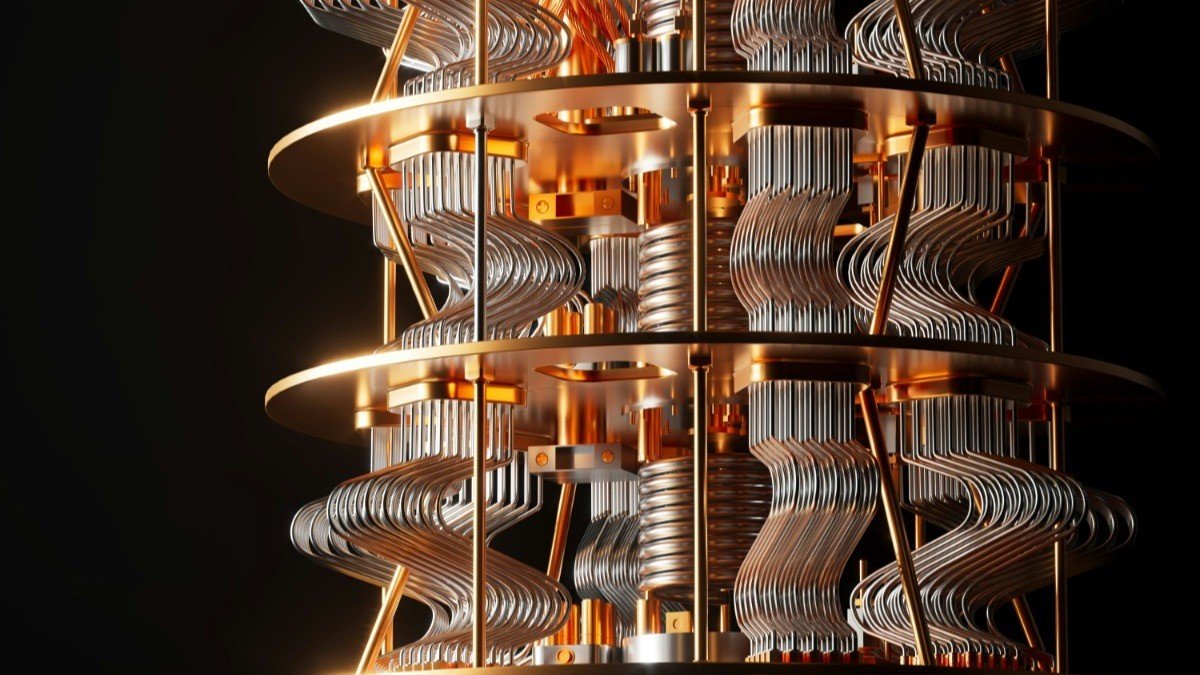
On the cost side, quantum hardware is not free: superconducting machines run near absolute zero on continuous cryogenic cooling, which draws more power than the computation itself, and the gold-heavy cryostat dominates the manufacturing footprint. At fault-tolerant scale, millions of physical qubits and the error-correction overhead they demand, those costs compound in ways no study has yet measured at industrial scale. On the upside, a single quantum processor today draws closer to a supercomputer’s rack than its building, orders of magnitude less energy than the classical simulations it could replace for the right problems, and its applications point squarely at decarbonization: cleaner chemistry, tighter grids, less wasted silicon.
The two sides do not fall evenly. The environmental risk sits in scaling the hardware; the environmental upside sits in the software and applications that run on top of it. That is the same split the investment case turns on, and it is why this article follows the money into the layer above the machine.
The quantum computing industry has been defined by the race to fault-tolerant hardware, with companies and governments investing billions into building quantum machines. The revenue in the field, however, is being defined by software that does not wait for it.
The question is not when fault-tolerant quantum computing (FTQC) arrives. It is which software companies can generate revenue regardless of that timeline, unlock the hardware’s capabilities, and find the gaps in the market where no one else is competing. That software layer is also where the climate upside lives: it lets existing classical infrastructure do more with less, today, regardless of the FTQC timeline.
The Gap in Plain Sight
Looking at the market from a revenue standpoint, McKinsey calculates that quantum had $700 million in top-down revenue in 2024. However, calculating bottom-up disclosed pure-play revenue from public information and SEC filings from IonQ, D-Wave, Rigetti, and Quantinuum, we get $86 million, with IBM adding an additional $125 million, bringing the visible total to $211 million. This leaves a gap of roughly $450 to $540 million, hidden inside Big Tech cloud like AWS Braket, Azure Quantum, and Google, as well as government grants.
This gap is the insight. The money exists within the vertical, but the hardware is uninvestable because VCs structurally can’t reach it: capital expenditure runs to nine figures, FTQC still needs physical breakthroughs, and the payoff sits far beyond a 10-year fund clock.
This is not a new pattern. In classical computing, the capital-intensive layers commoditized while defensible value migrated upward. The companies that defined those eras rarely owned the most expensive hardware; they owned the coordination layer on top of it. Quantum is early enough that the same migration is only beginning, but the shape is identical, and the environmental logic runs the same direction: the capital and the carbon concentrate in the hardware, while the value and the efficiency gains concentrate in the software above it.
Therefore, the companies that win this market won’t be building the hardware or the computers: they are the companies building the layer that everything else runs through.
Where Revenue Lives Today
SandboxAQ, an Alphabet spinout focusing on Large Quantitative Models in Post-Quantum Cryptography (PQC) compliance and pharma/bio simulation, missed its internal ARR projection by over $70 million (~$18M vs. ~$90M target), even though it has raised over $1 billion at a $5.6 billion valuation. The gap shows how the compliance sale is slower than the pitch.
Multiverse Computing, by contrast, is a quantum-software firm based out of Spain that is monetizing pre-FTQC on classical hardware: over 100 clients, a 5x valuation step-up, and reportedly raising €500M at a €1.5B target. Its CompactifAI product compresses large language models by up to 95% with only 2–3% accuracy loss, cutting not just inference cost but the energy that comes with it: the software layer letting AI do more with less on the same hardware. Although its revenue is undisclosed, it is still generating revenue today and proving the actual pattern: quantum math solving classical problems is where the buyer pays today.
There are, therefore, two pre-FTQC revenue paths: PQC compliance, which carries a slower sales cycle, and quantum-inspired algorithms on classical hardware, which access the $106B AI-inference market instead of the sub-$100M quantum market.
A moat exists where end-users cannot reach hardware without a translation layer. Origin Pilot, a quantum operating system out of China, is banned in the West, leaving a Western procurement gap for a hardware-agnostic operating system, and reinforcing the idea that software adoption drives hardware adoption, not the reverse.
The strongest validation signal is Santander taking an equity stake in Multiverse. When a bank’s balance sheet moves before its operations do, that is a leading indicator.
Where the Checks Should Go
Given PQC compliance, the immediate investment intuition would be finance, but the market is crowded and pulling back. Goldman Sachs has disbanded its quantum team and JPMorgan’s Marco Pistoia (Pistoia Labs) has departed. The market is signaling that it does not require another portfolio-optimization app, even though optimization is already the largest application segment across finance, logistics, and supply chain.
The tail-risk of insurance, load balancing in energy grids, and telecom all run the same combinatorial math and Monte Carlo simulations as derivatives, the only difference being that these markets have zero quantum-native competition. Insurance is one of the highest-conviction plays: identical math, deep-pocketed buyers, and zero competitors, with energy grids and telecom following closely behind on value potential.
With energy grids specifically, the value is also a climate one: the unit commitment problem, deciding which generators switch on or off to meet demand at least cost, only grows harder as volatile renewables and decentralization increase, and its decisions cascade directly into both cost and emissions. With IRA and EU Green Deal money flowing into grid modernization and utility optimization RFPs active now, grid load balancing is a policy-driven climate TAM, not a someday market.
Semiconductors hold the largest addressable market of all, but capturing it means finding the one door that is actually open. Materials discovery of PFAS-free chemicals, catalysts, rare-earth-free magnets, and batteries is one such vertical: huge, but not a greenfield. SandboxAQ’s $500M CHIPS award has already made it the incumbent, making it too late for an early-stage check. The real value and open door lies in quantum-inspired EDA optimization, which uses the same combinatorial math as portfolio and logistics optimization. The core EDA flow, place-and-route, the Cadence/Synopsys layout duopoly, still has no dedicated quantum pure-play, and that greenfield is open. But the adjacent power-integrity layer already has its first credible entrant: ColibriTD, a French quantum-software startup, is working with SEALSQ and Xdigit on a quantum solution for IR Drop (the voltage drop across a chip’s power-distribution network) at sub-7nm nodes, targeting commercial deployment in 2026 and aiming to lift wafer yield from roughly 50% to 80%.
That yield gain is also where the climate argument lands hardest. Fabs are among the most resource-intensive facilities on earth, consuming enormous energy, ultrapure water, and process chemicals per wafer. Therefore, a wafer that yields 80% good chips instead of 50% embeds far less energy, water, and chemistry per usable chip. Quantum-inspired optimization at this node is based on efficiency, doing more with less, at the most carbon- and resource-heavy step of the entire value chain. And the entrant proving it is small, non-US, and coming in through power integrity rather than layout, which both reinforces the Western procurement gap and shows the greenfield opening exactly where the thesis predicted. The place-and-route core is still empty. As before, all of this is quantum-inspired math on classical, NISQ-era hardware, not gate-model QC.
The absence of investment is pattern-matching to the same five verticals, not a red flag. We are pinpointing a discovery lag, not risk. The greenfield gap is the insight.
Conclusion
The check-writing logic follows directly. Avoid the hardware layer, where capital is consumed and revenue stays opaque. Fund the translation layer: the compilers, security, and software (L4/L5 and PQC) that every end-user must pass through to reach a machine they cannot program directly. And seed the verticals that no one has entered yet, where the math is proven and the buyer already has a budget.
None of this depends on knowing which hardware architecture wins, or when. That is the point: this is revenue that exists today, regardless of the timeline. The edge is not predicting the winner of the hardware race, it is funding the software and the verticals that get paid, and cut energy and resource use, before the race is finished.
At Bombellii, we’re placing our bets on the layer above the machine: the software that turns quantum’s promise into revenue today, and the greenfield verticals still waiting for their first check.
Selected Sources and Research
This article reflects a synthesis of institutional research, industry reports, company analysis, and original market research conducted during the Bombellii Ventures fellowship.
Industry Reports & Market Intelligence
- McKinsey. Quantum Technology Monitor 2025.
- The Quantum Insider. 2025 Quantum Market Sizing Report (thequantuminsider.com/2025/08/19).
- MarketsandMarkets. Post-Quantum Cryptography Market (Oct 2025).
Environmental & Energy Footprint
- Quantum vs. HPC power draw: arxiv.org/pdf/2509.12949 (20-qubit case study, ~30 kW peak).
- Cooling exceeds computation; scales with error correction: osti.gov/servlets/purl/1880806.
- Life-cycle / cryostat production footprint: arxiv.org/pdf/2411.00118; arxiv.org/pdf/2107.05362.
- Idle-energy comparison to classical supercomputers: hpcwire.com (Feb 3 2025).
Company Analysis
- SandboxAQ: getlatka.com; The Information; cbinsights.com; tsginvest.com.
- Multiverse Computing: techfundingnews.com; cbinsights.com; crunchbase.com; CompactifAI: siliconangle.com/2026/02/10.
- ColibriTD: thequantuminsider.com/2025/03/25 (H-DES); eu-startups.com (Sept 2023); colibritd.com.
- Semiconductor IR-Drop (SEALSQ / ColibriTD / Xdigit, June 23 2025): globenewswire.com; nasdaq.com; iot-now.com.
- Pure-play revenue (IonQ / D-Wave / Rigetti / Quantinuum): SEC filings.
Vertical & Market Signals
- Insurance use cases: arxiv.org/pdf/2210.06172.
- Telecom: mckinsey.com/quantum-from-concept-to-reality-2025; FCC TAC slides (Aug 2025).
- Energy grid & unit commitment: crispidea.com/quantum-computing-industry-outlook-2026; IEA, Energy and AI (2025).
- Goldman disbandment: Bloomberg (April 2026); JPMorgan/Pistoia: IonQ release (July 2025).
Original Research
- Physical value-chain mapping and node-level revenue allocation.
- Market landscape and pure-play vs. Big-Tech revenue reconciliation.
- Underexplored-vertical investability scoring.